
Tag Archives: two-party system

Measuring up the situation

photo credit: Phil McElhinney via photo pin cc

In high school, I ran for the track and field team. I ran pretty much every event: the 100-yard, 200-yard, 400-yard, and 1 mile events regularly and somewhat less regularly ran the 300-yard hurdles and the 2-mile. I could sprint and run long distance; a weird combination that once saw me run in the 1-mile and, immediately afterwards, run as the anchor in the 4×100-yard relay. My team couldn’t have been very good if after already running a mile, I was the best option for the relay. Not that I was the best sprinter to run the anchor. The best sprinters couldn’t be bothered running in relays because (at least where I grew up) an athlete could only run in 2 events per meet.

This brings me to the most recent Olympic games where, since I was sitting at home a lot with a broken arm, I was able to see a lot of the coverage. One type of event I rarely have seen televised is the running. I’m not sure why I’d never really caught it before, I guess it’s not as hyped as other events are, unless Usain Bolt is involved. Bolt’s main claim to fame (athletically speaking at least) is the 100-meter. Meter, as in the metric system’s not-so-equal equivalent to the imperial system’s yard. This wasn’t much of a surprise to me, I’ve always known that for some reason the U. S. has stuck with the imperial system while the rest of the world has switched to the metric system.

Then I started to do a little research on the topic and this quote shocked me a bit:

Taillon said he has competed in some older events in the Northeast that still use miles.

I grew up in the Northeast! We were actually behind the times in this regard? I found out that many of these events are now on the metric system, at least on the state level. I’m not sure about my high school, I guess the actual track is probably still measured in miles. More surprising to me was that quote came from Texas, a state with questionable educational morals. Then again, New England is known for its archaic laws. Not quite a wash, but I’m just saying that everyone makes mistakes.

Also, damn you Ronald Reagan! The whole reason for this post was a rant about how we don’t use the metric system in the U.S. and now I know at least part of the reason. As the above article notes, it was Reagan who put a halt the committee in charge of America’s transition to the metric system. It does however seem like the country is moving towards the metric system and I believe we’d all be better off for it. Now they just have to replace every road sign in the country and we’ll be all set…

Politics

Some people call it “drama,” or maybe “bullshit,” but what they’re talking about is politics. It’s annoying and blinds good judgement. I feel like even though I know it’s a bad thing, I can’t help but be affected by it. For instance, today I was thinking about writing a complimentary post about something in my life but I was recently disappointed by this thing, so I’m not writing that nice piece anymore. In a roundabout way, I’m being motivated not to do something for political reasons, even though I doubt anyone knows what I’m talking about nor cares.

Deciding not to write that other blog post reminded me of this time in elementary school I did basically the same thing. Let’s say it was 3rd grade (might have been 2nd or 4th, doesn’t matter. Me = little kid). Our class decided to hold an election for class president, I don’t remember this person gaining any authority or privileges, it just seemed like a cool title to have as a kid, so I put myself in the running. To help sweeten the pot, I asked my mom if we could go out and buy a board game to give to the class (10-years before I could vote, and I already understood campaigning). We went to the store and bought Trouble, a solid choice for kids—though a game I now realize is stupid (much like Candy Land. That’s right, Candy Land is stupid).

I brought my game into class, very proud of myself for procuring it. As it turns out though, another kid went out and got FIVE board games to give to the class, including Shark Attack (a more specific, higher stakes, kind of “trouble”). So I lost the election, kids love toys and I couldn’t match the competition (perhaps this is why I have it out for lobbyists and so many big corporations). Partially because I was selfish, partly because I was bitter, and most importantly because I was a kid, I kept the game of Trouble for myself. When I came home with it, my mom asked why I still had the game with me, I said that I lost the election so the class couldn’t have the game. Obviously, and rightly, she was under the impression, win or lose, I would still give the game to the class. So, what I should do is just write the post I was going to write in the first place and not be a child about it. But here I am, refusing to learn from my mistakes, just like in real politics.

Two-Party System

I tried making this into an album cover for an imaginary [punk] band, but I hated all my ideas. Instead, here’s a photo I’m just calling, Two-Party System:

Any ideas for band and/or album names for this? Let’s see them in the comments. Maybe I’ll do something fun if I get enough ideas.

What is it that you mean? (Part 2)
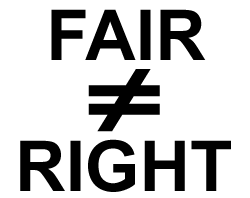
The other day I wrote about a couple of words that are hard to translate into other languages (and hinted at a second part). Well today, I talk about a word from a list of, 5 More Difficult Words to Translate, from ALTA Language Services. To English speakers, this word will seem common and the word is fairness.

I’ve never thought of the word as particularly hard to define but I guess it’s just a case of, “fairness, you know, when something is fair.” This, of course, does not cut it. If you can’t define something without using the word in the definition, then it would seem you can’t really define it. Anyways, what the article has to say about it:

Fairness
This past January, a blog post from the Atlantic Monthly by economist Bart Wilson sparked a debate about whether the English word Fair can be accurately translated. In the Beyond Words analysis of the Fairness translation debate, we explored all the sides, and discussed Wilson’s position that Fairness is a uniquely Anglo concept that carries historical baggage making it very different from notions of equity and right vs. wrong. You decide.

Well, when it’s spelled out like that. This is a fundamental problem, trying to differentiate between what is fair and what is right. Is it right for everything to be fair? Or would being unfair sometimes be the right thing to do? Not to get too political, but it seems like one of the key differences between Democrats and Republicans. Democrats want to do the “right” thing, tax the rich and help out the less fortunate. Republicans want to be more “fair” and treat everyone the same no matter their status in society. Obviously, Democrats would say it isn’t fair that people are born into poverty and Republicans would say it isn’t right to take money from people who earned it. It’s all very muddled and I’ll probably never be able to shake the idea of “Is this right or is this fair and which is more important?”

I’m Voting Republigum!

I bought this from a candy store, called Sugar Heaven, a couple of months ago:

Photo by Matt Aromando (2012 - Boston, MA)

A little too good to believe. Obviously, what attracted me to this was that it’s gum that has, “Vote Republican,” printed on the front. The amazing thing is that the name of the gum is actually, “BONUS!” printed in an all caps/metallic font. After doing a quick search, it turns out that you can buy election gum for either party (though neither in anything more exciting than peppermint). Their website is also a cute gem that reminds me of playing on Candystand in the late 90′s, though minus all the candy themed Flash games (including the very addicting mini-golf game, with I want to say, Lifesavers).